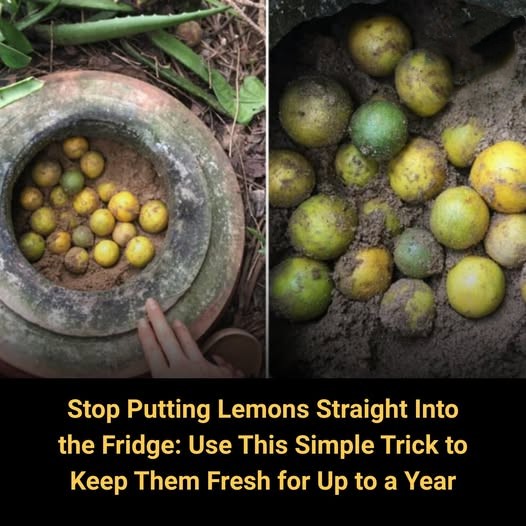
Few ingredients are as versatile and necessary in a kitchen as the humble lemon. From adding a bright zest to your baking to providing the essential acidity for cocktails and marinades, lemons are a kitchen staple.
However, anyone who keeps lemons on hand knows their lifespan can be frustratingly short. Tossed into the fridge drawer, they tend to dry out, shrivel, and lose their precious juice within a couple of weeks, forcing you to constantly restock.
But what if you could extend the life of your lemons from a few weeks to several months—even up to a year? It’s possible, and it doesn’t require any fancy equipment, just a simple storage trick based on an understanding of what causes lemons to spoil.
The Problem with Simple Refrigeration
The common practice of storing lemons directly in the refrigerator’s crisper drawer is actually what leads to their demise.
Moisture Loss: A lemon’s skin is porous. A refrigerator’s environment is specifically designed to be dry to limit the growth of mold and bacteria. This dry air rapidly pulls moisture out of the lemon’s skin, which causes the fruit to become hard, dull, and shriveled.
Juice Depletion: As the skin dries out, so does the pulp inside, dramatically reducing the amount of usable juice you can extract and making the lemon less flavorful.
The key to long-term lemon preservation is to create a micro-environment that is high in humidity while still being cold.
💧 The Simple Trick: The Water Bath Method
The secret to keeping your lemons fresh for months lies in submerging them in a simple container of water before placing them in the fridge. This effectively creates a moisture barrier that prevents the dry refrigerator air from wicking away the lemon’s natural juices.
What You Need:
Fresh, undamaged lemons.
A large, airtight container (like a glass jar or a food storage box).
Plain tap water.
The Method:
Inspect the Lemons: Start with firm, unblemished lemons. Any cuts or soft spots will accelerate spoilage.
Place in Container: Carefully place the lemons into your airtight container.
Cover with Water: Fill the container with enough cold, plain tap water to completely submerge all the lemons.
Seal and Refrigerate: Seal the container tightly with its lid and place it in the main body of your refrigerator.
Maintenance for Maximum Longevity:
While this method works wonders, it requires one key maintenance step for maximum freshness:
Change the Water: You must change the water every few days, or at least once a week. This prevents any potential microbial growth and keeps the environment pristine.
The Science Behind the Success
This simple water-bath technique works because it addresses the two main enemies of a lemon: air exposure and dryness.
Airtight Barrier: The water acts as a protective shield against the circulation of dry air inside the refrigerator, which would normally dehydrate the fruit.
Constant Hydration: The slight permeability of the lemon’s skin allows it to stay constantly hydrated, keeping the zest vibrant and the pulp plump with juice.
Cold Storage: The refrigeration temperature slows down the lemon’s natural metabolic processes, delaying the breakdown of its tissues.
By combining the low temperature of the fridge with the high humidity of the water bath, you create the ideal conditions for long-term storage, keeping the lemons nearly as good as the day you bought them.
Other Long-Term Lemon Storage Methods
While the water bath is great for keeping whole lemons usable, if you’re looking for different ways to preserve the flavor and juice for up to a year, consider these alternatives:
1. Freezing Lemon Juice
How: Squeeze the juice from your lemons and pour it into an ice cube tray.
Usage: Once frozen, transfer the cubes to a freezer bag. Pop out a cube whenever you need a splash of lemon juice for cooking or drinks.
2. Freezing Lemon Zest
How: Zest the lemons before juicing. Spread the zest thinly on a baking sheet and freeze until hard. Transfer to an airtight freezer bag or container.
Usage: Add frozen zest directly into recipes like muffins, sauces, or dressings for a powerful burst of citrus flavor.
The Verdict
Stop wasting money on lemons that shrivel and harden in the crisper drawer. By adopting the simple, inexpensive method of storing your lemons in a water-filled, airtight container in the refrigerator, you can ensure a supply of fresh, juicy, and zesty lemons ready for any recipe, potentially for an entire year.
