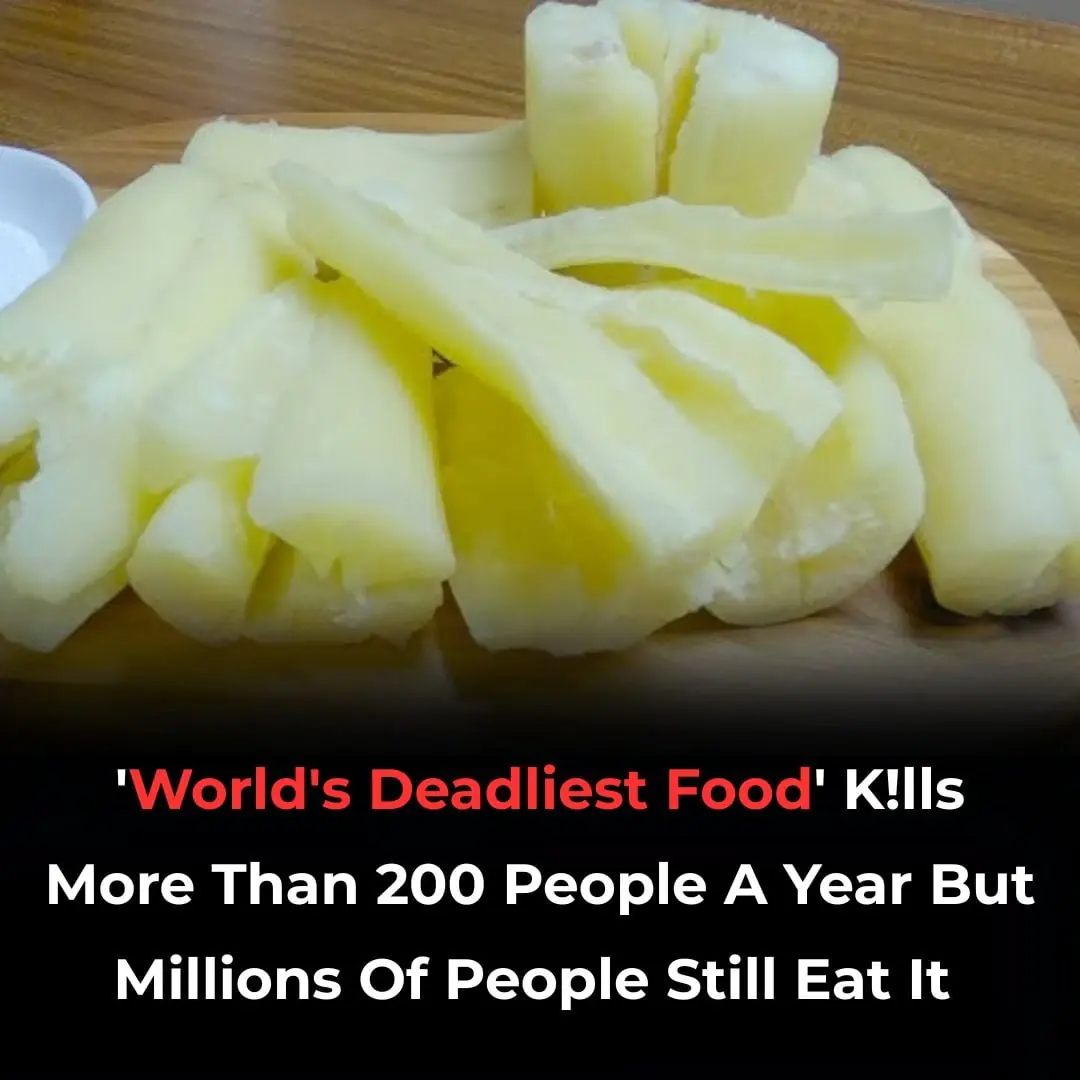
It is a food that feeds half a billion people, providing crucial sustenance in some of the world’s most challenging climates. It is the third-largest source of carbohydrates in the tropics, a resilient crop that represents a lifeline for millions.
Yet, this ubiquitous, unassuming starchy root holds a terrifying secret: it is a weapon of death if prepared incorrectly.
Every year, the tragic confluence of essential sustenance and ancient toxins leads to the deaths of over 200 people globally, with thousands more suffering devastating long-term effects. We are talking about Cassava, also known as manioc or yuca, and the danger hidden within its fibrous roots is pure, potent cyanide.
This is the shocking story of the planet’s most dangerous staple food, the complex cultural methods required to make it safe, and why the sheer scale of global consumption means the risk of accidental poisoning remains a terrifying reality.
The Hidden Threat: A Reservoir of Cyanide
Cassava is a root vegetable that thrives in tropical and subtropical regions where other crops fail. This drought resistance makes it a vital part of the diet for approximately 500 million people, primarily in Africa, Asia, and South America.
But beneath its harmless brown skin and starchy white flesh lies a defense mechanism designed to ward off pests: Cyanogenic Glycosides.
When the cassava root is damaged—such as through grating, chewing, or improper cooking—these compounds break down and release Hydrogen Cyanide, a poison famous for its rapid, lethal effect on the human body.
The Two Varieties: Bitter vs. Sweet
Cassava comes in two main types, both containing these toxins:
Sweet Cassava: Contains lower levels of cyanide, often concentrated at the ends of the root, and typically only requires standard cooking (like boiling) to be rendered safe.
Bitter Cassava: Contains cyanide levels up to 50 times higher than the sweet variety and requires an elaborate, days-long detoxification process to be edible.
Farmers often choose the bitter, more toxic varieties precisely because the high toxin content deters pests and crop theft, ensuring a more reliable harvest—but demanding flawless preparation from those who consume it.
A Deadly Game of Preparation: How 500 Million Stay Safe
For the half-billion people who rely on cassava, preparing it is not just cooking; it is a life-or-death science passed down through generations. These traditional preparation methods are necessary to neutralize the cyanogenic glycosides:
1. Peeling and Grating
The first step is meticulously peeling the rough outer rind, where much of the toxin is concentrated. The root is then grated, which maximizes the surface area, allowing the cyanide to escape more easily.
2. Soaking and Fermenting (The Long Detox)
This is the critical stage for bitter cassava. The grated root pulp is often submerged in water for several days. This process encourages fermentation, which breaks down the cyanogenic glycosides and allows the toxic hydrogen cyanide gas to evaporate.
3. Heating and Drying
The fermented pulp is then thoroughly cooked, boiled, or dried in the sun. Heat is crucial, as it helps vaporize any remaining volatile cyanide gas and completes the detoxification.
The WHO reports that the majority of fatalities occur when these rigorous traditional methods are skipped, cut short, or performed incorrectly, leading to accidental poisoning.
🛑 The Hidden Toll: Symptoms and Long-Term Damage
Consumption of improperly prepared cassava leads to acute cyanide poisoning. The symptoms are swift and terrifying:
Acute Poisoning: Within minutes, the victim may experience vomiting, vertigo, confusion, paralysis, and severe gastrointestinal distress. In severe cases, the poison quickly attacks the central nervous system, leading to respiratory failure, coma, and death.
Chronic Exposure: Even low-level, chronic consumption of cyanide from cassava can lead to debilitating, long-term health issues, including neurological disorders, irreversible paralysis, and cognitive impairment.
Despite the known dangers, the global consumption of cassava is not only maintained but is growing, a testament to its nutritional density, affordability, and ability to thrive in poor soil—making it one of the most culturally vital and, tragically, most dangerous foods on earth.
The Takeaway: Respecting the Staple
The danger of cassava is a stark reminder of the delicate balance between sustenance and survival in many parts of the world. While safe for consumption when processed by those who understand its deadly nature, it serves as a powerful cautionary tale for the rest of the world.
When consuming cassava (often marketed as yuca or tapioca) outside of its endemic regions, always ensure it is from a trusted commercial source that has undergone the complete and proper preparation process. Never attempt to prepare unprocessed, bitter cassava yourself.
