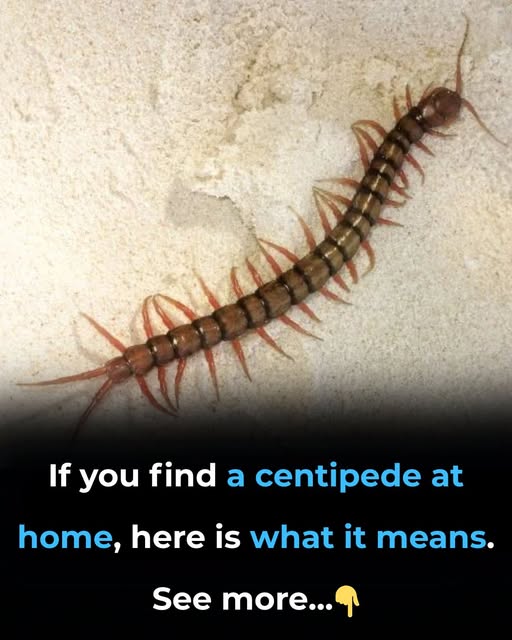
Finding a centipede in your home can be a startling experience. Their many legs and rapid movements often trigger an immediate “ick” factor. However, before you reach for the shoe or the bug spray, it is important to understand what their presence actually signifies about your living environment.
Here is a comprehensive look at what it means when you find a centipede at home and why they might actually be the “roommates” you never knew you needed.
1. You Have an “Exterminator” on Duty
The most important thing to know about the house centipede (Scutigera coleoptrata) is that they are predators. They don’t eat your food, your wood, or your clothes. Instead, they hunt the bugs you actually want to get rid of.
If you see a centipede, it means they are hunting:
Cockroaches
Silverfish
Bed bugs
Termites
Ants and Spiders
They have an incredible metabolism and are constantly on the hunt. In many ways, a centipede is a sign of a self-regulating ecosystem within your walls.
2. You Might Have a Moisture Issue
Centipedes do not have a waxy cuticle on their bodies like many other insects, which means they lose moisture very easily. They require a damp environment to survive.
If you are seeing them frequently, it is a signal from nature that certain areas of your home—typically the basement, bathroom, or crawl spaces—have high humidity levels. They are drawn to:
Leaky pipes
Damp basements
Poorly ventilated bathrooms
Clogged gutters that keep exterior walls damp
3. There is an Underlying Prey Population
Centipedes don’t hang out where there is no food. If you see one centipede, it’s a visitor. If you see them regularly, it means there is a sustained population of other insects for them to eat.
Think of the centipede as a “symptom” rather than the “disease.” Their presence suggests that there are cracks or crevices in your foundation or windows letting in smaller “prey” bugs that the centipede is following.
Comparison: House Centipedes vs. Other Pests
| Feature | House Centipede | Cockroach | Silverfish |
| Diet | Other insects | Food scraps/Waste | Paper/Starch |
| Health Risk | Very Low | High (Bacteria) | Low |
| Damage | None | High | High (Books/Clothes) |
| Action | Useful predator | Dangerous pest | Nuisance pest |
4. They are Generally Harmless to Humans
While they look intimidating with their 15 pairs of legs, house centipedes are not aggressive. They prefer to run away (very fast!) rather than engage.
Note: While they do technically possess venom to paralyze their prey, their jaws are rarely strong enough to pierce human skin. On the rare occasion a bite occurs, it is usually described as similar to a minor bee sting and typically causes no lasting harm unless you have a specific allergy.
5. How to Get Rid of Them (Without Chemicals)
If you can’t get past the looks and want them gone, you don’t necessarily need pesticides. You simply need to change the environment:
Dehumidify: Use a dehumidifier in the basement to dry out the air.
Seal Cracks: Use caulk to seal entry points around baseboards and windows.
Eliminate the Food: If you get rid of the spiders and ants, the centipedes will leave on their own to find a better hunting ground.
Clear Debris: Move damp leaves or wood piles away from the exterior of your home.
Final Verdict
Finding a centipede means your home has a natural protector roaming the shadows. They are nature’s way of keeping more harmful pests in check. If you can stomach their appearance, leaving them alone is often the best way to keep your home bug-free.
