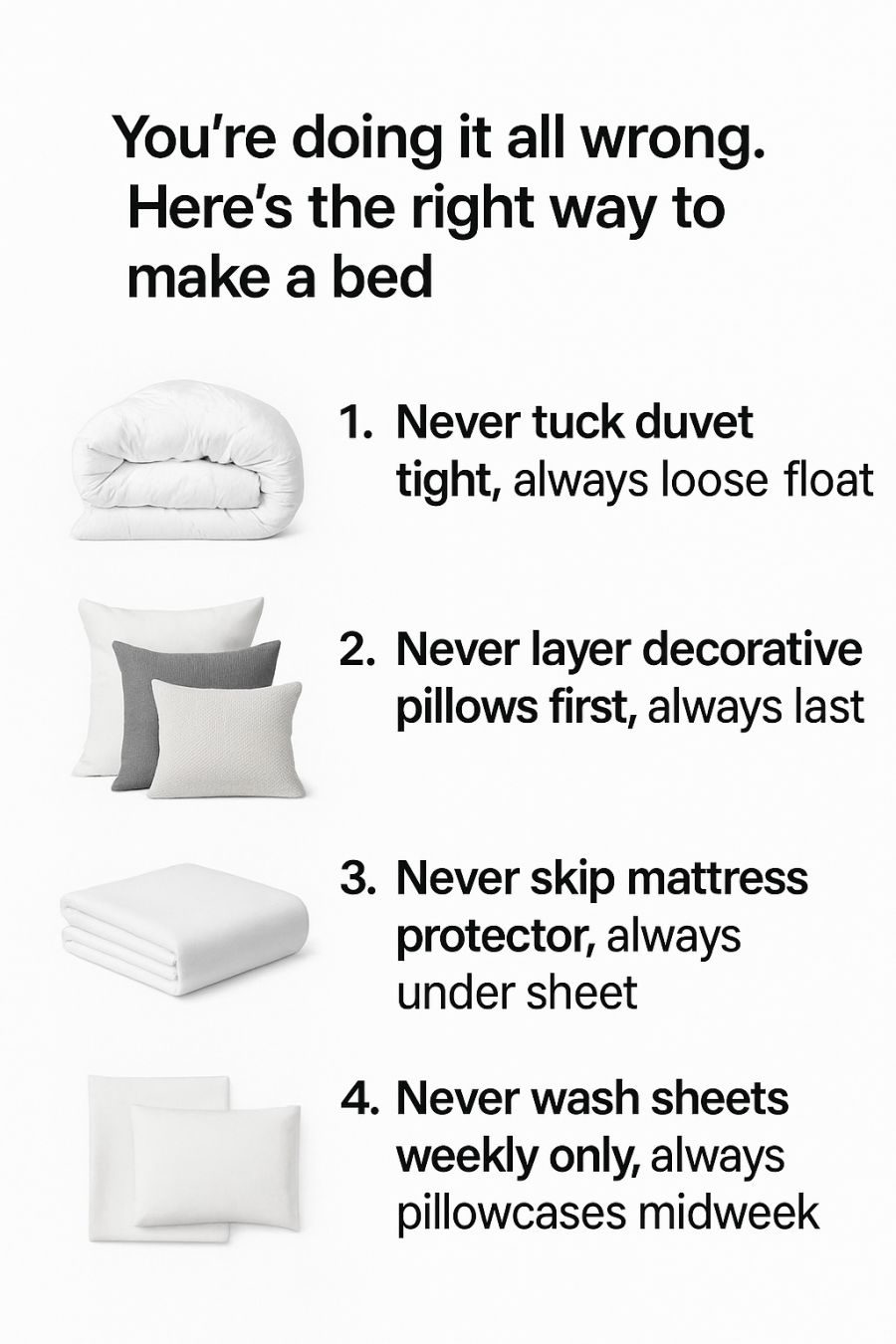
Making a bed might seem like a straightforward task, something we’ve all done countless times without much thought. However, the way you make your bed can actually impact your sleep quality, the longevity of your bedding, and even the aesthetic appeal of your bedroom. If you’ve ever found yourself kicking off the covers in frustration or waking up tangled in sheets, it might be time to rethink your approach to bed-making.
In this guide, we’ll walk you through the steps to creating a perfectly made bed, from choosing the right materials to mastering the art of layering. Whether you’re aiming for a hotel-like finish or a cozy, lived-in look, these tips will help you transform your bed into a haven of comfort and style. Say goodbye to restless nights and hello to a more inviting sleep environment!
1. Start With a Clean Slate: Why Mattress Protectors Matter
Before you even think about sheets and blankets, the first step is to ensure your mattress is protected. A good mattress protector serves as a barrier against allergens, dust mites, and spills, extending the life of your mattress. Look for a protector that fits your mattress size snugly; most come in standard sizes like twin, queen, and king. It should be waterproof but still breathable, ideally with a thread count of at least 200 for comfort. Remember, a clean base sets the tone for the rest of your bedding.
2. The Perfect Fit: Choosing the Right Sheets
When it comes to sheets, size and material matter. Start by measuring your mattress, including its depth. Standard mattresses range from 9 to 14 inches in depth, but pillow tops or luxury mattresses can be deeper, requiring special deep-pocket sheets. Choose sheets with a high thread count, preferably above 300, for a softer feel. Cotton is a popular choice due to its breathability and durability, but bamboo and microfiber sheets offer unique benefits, such as moisture-wicking properties.
3. The Art of Layering: How to Arrange Your Sheets
Begin with the fitted sheet, ensuring it hugs the corners tightly for a smooth surface. Next, lay down the flat sheet upside down, so the right side shows when folded back. Tuck the sheet neatly at the foot of the bed using hospital corners for a crisp look. Adding a lightweight blanket or a coverlet provides warmth and texture. Ensure each layer is smooth and free of wrinkles before adding the next.
4. Never Tuck Your Duvet: The Benefits of the Loose Float
Traditional wisdom might tell you to tuck in your duvet, but a loose float can offer a more relaxed and inviting appearance. By letting the duvet drape naturally over the sides of the bed, you create a cloud-like effect that is cozy and aesthetically pleasing. Ensure your duvet cover is slightly larger than the insert for a full and fluffy look that doesn’t appear overstuffed.
5. Fluff and Fold: Proper Pillow Arrangement
Pillows are not just for comfort but also for style. Begin by fluffing your pillows to restore their shape and volume. Place the larger pillows at the back, such as Euro shams, followed by standard pillows, and finish with decorative throw pillows. Keep the number of pillows balanced – too many can overwhelm the bed, while too few may look sparse. A good rule of thumb is to use two to four pillows, depending on bed size.
Continue reading…
