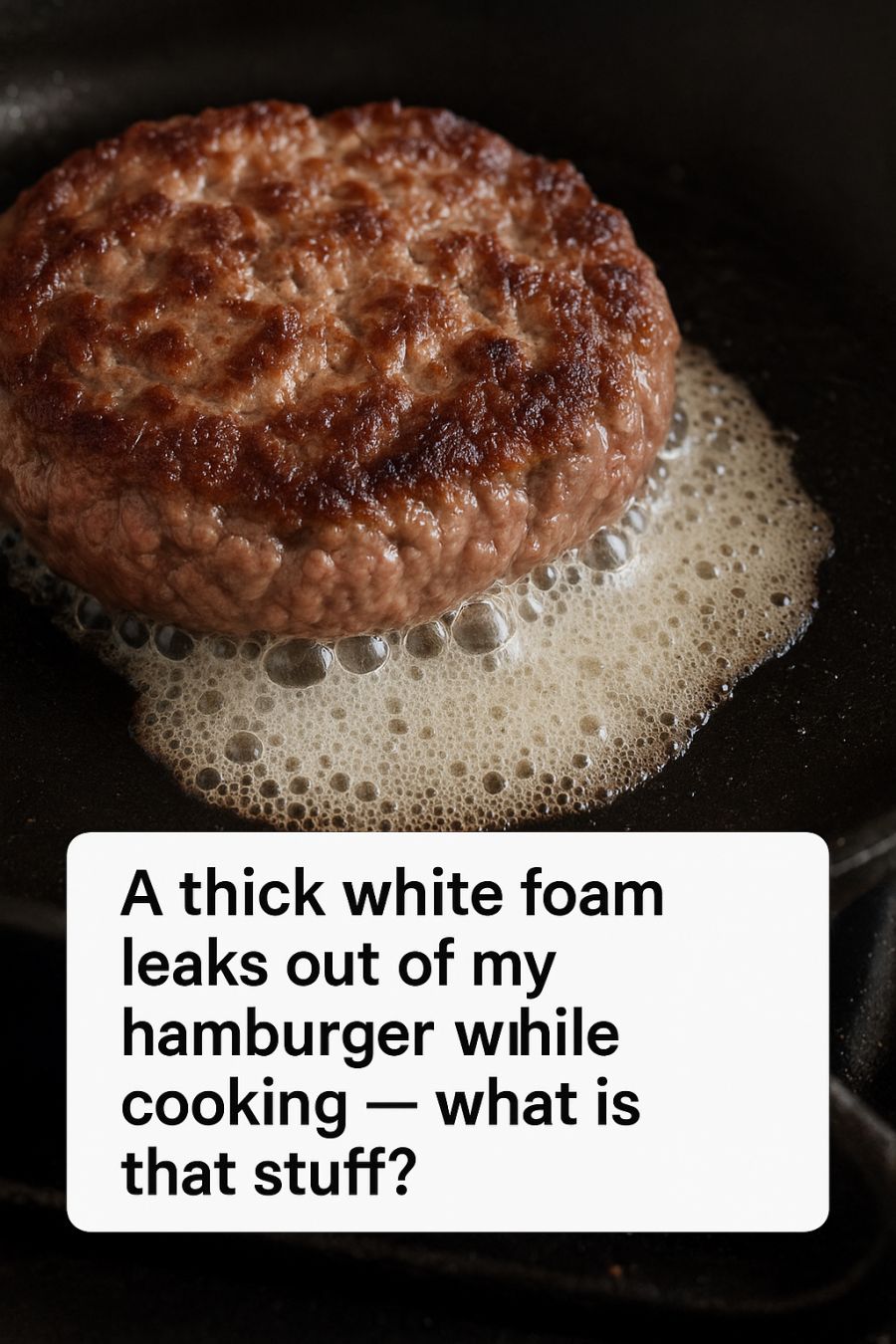
A thick white foam leaks out of my hamburger while cooking — what is that stuff?
6. The Impact of Meat Quality, Fillers, and Added Liquids
The quality of the meat you use has a significant impact on how much foam is produced during cooking. Higher-quality meats with fewer additives tend to produce less foam. Lower-quality meats might contain fillers such as soy protein or breadcrumbs, which can increase the amount of foam as they release their own proteins and moisture.
Additionally, some ground beef products have added liquids to enhance juiciness or weight. These added liquids increase the water content, which in turn leads to more foam as the water is released during cooking. Choosing meat with minimal additives and understanding the labels can help you select products that will produce less foam.
7. Pan Crowding, Heat Levels, and Other Cooking Mistakes
The way you cook your burgers can greatly influence the amount of foam that appears. Crowding the pan with too many patties at once can trap steam and moisture, leading to more foam. When the pan is crowded, the meat steams rather than sears, which enhances foam production.
Similarly, cooking at too low a temperature can prevent the meat from browning properly, allowing more proteins and water to be expelled as foam. It’s important to maintain a proper heat level that allows for a good sear and minimizes steaming. Ensuring there’s enough space between patties and using the right cooking temperature can help reduce the amount of foam.
8. How Salt, Seasonings, and Marinades Affect the Foam
Salt and seasonings can draw out moisture from the meat, which affects the amount of foam. When salt is added to ground beef, it dissolves proteins, making them more soluble in water. This can lead to more foam as the salt draws moisture and proteins to the surface during cooking.
Marinades, especially those containing acids like vinegar or lemon juice, can also break down proteins and increase moisture content, leading to more foam. It’s important to balance the use of salt and marinades to control the amount of foam while still achieving the desired flavor profile.
9. Viral TikTok Burger Hacks: Do They Help or Make It Worse?
Social media platforms like TikTok are full of burger hacks that claim to improve your cooking experience, but not all of them are scientifically sound. Some hacks may suggest methods that inadvertently increase foam production, such as using excessive marinades or overcrowding the pan.
While some tips might be helpful, it’s crucial to understand the underlying science of cooking burgers. For instance, hacks that focus on achieving a good sear or using minimal seasoning can actually help reduce foam. It’s always a good idea to critically evaluate these hacks and understand their impact on the cooking process.
10. Simple Techniques to Reduce or Prevent the White Foam
If the white foam bothers you, there are several techniques you can use to minimize its occurrence. First, ensure your meat is at room temperature before cooking, as this reduces the amount of moisture that will be released. Avoid overcrowding the pan and cook at a high enough temperature to sear the meat quickly.
Using fresh, high-quality meat with minimal additives can also reduce foam. Additionally, patting the meat dry before cooking can help remove excess moisture. If you choose to season your meat, do so just before cooking to prevent excessive moisture release.
