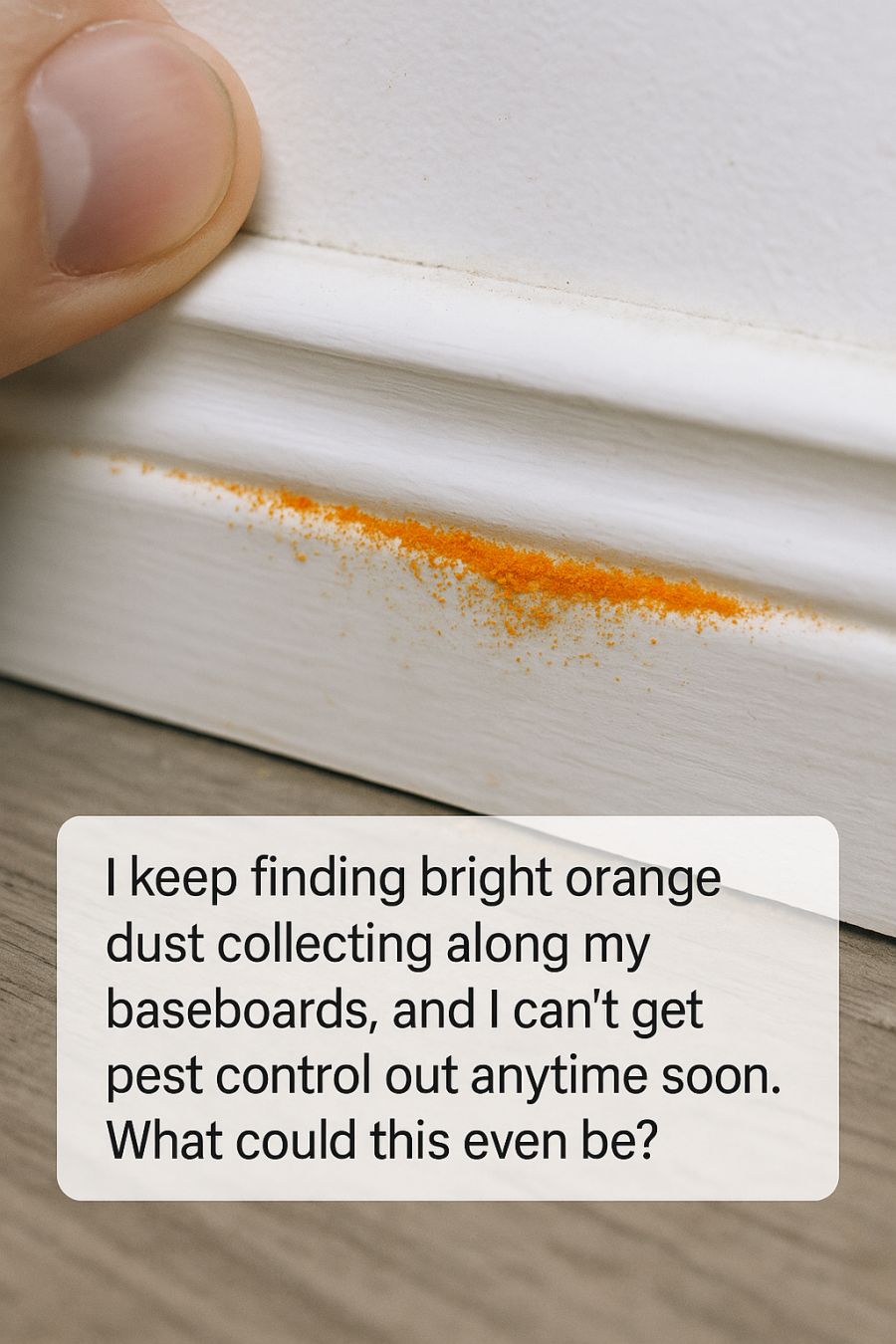
Discovering bright orange dust accumulating along your baseboards can be both perplexing and concerning. This unusual phenomenon might lead you to wonder about its origins and whether it indicates a larger problem within your home. While waiting for pest control or a professional assessment, it is essential to explore potential causes and consider possible solutions to mitigate the issue.
In this article, we will delve into various reasons why you might be encountering this vibrant dust. From pest-related issues to structural concerns, we will explore plausible explanations and provide insights into how you might address the situation in the interim.
1. Could It Be Sawdust From Hidden Wood Damage?
One of the primary culprits for orange dust could be sawdust resulting from hidden wood damage. If you have wooden floors, walls, or furniture, it’s possible that the dust is a byproduct of wood deterioration or even a sign of pest activity. Wood-boring insects like termites or carpenter ants can cause significant damage, often leaving behind frass—a mixture of wood particles and insect excrement—that can appear as orange dust.
To investigate further, check for small holes in wooden surfaces or soft, spongy areas that might indicate decay. If you find any, it’s crucial to address the issue swiftly to prevent further damage and maintain the integrity of your home’s structure.
2. Termite Frass Vs. Ordinary Dust: How To Tell The Difference
Termite frass, often confused with ordinary dust, is a potential source of orange particles. Unlike regular dust, which tends to be lighter and more varied in color, termite frass is more uniform and may resemble tiny wood-colored pellets or granules. The size of these particles is typically around 1 millimeter in diameter.
One way to differentiate termite frass from ordinary dust is by examining its texture and uniformity. Termite frass will often be found in small piles near the affected area, suggesting active infestation. If you suspect termites, it’s wise to conduct a more thorough inspection and consider professional pest control services.
3. Carpenter Ants And Other Insects That Leave Orange Debris
Carpenter ants are another insect that might be responsible for the orange dust along your baseboards. These ants create nests in wood by hollowing it out as they build their colonies, often leaving behind sawdust-like debris. While their frass is usually lighter in color, it can appear orange if mixed with other substances.
Inspect your home for signs of carpenter ant activity, such as small holes in walls or furniture, rustling noises within walls, or the presence of the ants themselves. Identifying entry points and sealing them, along with reducing moisture levels, can help manage the issue until professional help is available.
4. Rusting Fasteners: When Screws, Nails, And Brackets Turn To Orange Powder
Rusting fasteners, such as screws, nails, and brackets, can also contribute to orange dust. Over time, metal components can oxidize, especially in humid environments, leading to the formation of rust that flakes off and collects as dust.
To determine if rusting fasteners are the source, inspect areas where metal components are used in construction, such as baseboards, door frames, or window sills. If rust is present, consider replacing or treating the affected hardware to prevent further deterioration.
5. Wood Friction Dust From Doors, Floors, And Furniture Rubbing
Friction between wooden surfaces, such as doors, floors, and furniture, can generate dust that settles along baseboards. This type of dust is often caused by the movement or rubbing of wood against wood, leading to the gradual breakdown of the material.
To identify if friction is the cause, look for areas where wood surfaces make contact, such as door frames or sliding furniture. Applying wax or lubricants can help reduce friction and minimize dust production. Regular maintenance and adjustments can also prevent wear and tear over time.
6. Paint, Stain, Or Drywall Pigments Breaking Down Over Time
Another possibility is the breakdown of paint, stain, or drywall pigments, which can produce orange dust. Environmental factors such as humidity, temperature fluctuations, and UV exposure can cause these materials to degrade, flaking off in small particles.
Inspect painted surfaces or drywall for signs of peeling, cracking, or fading. If you notice these issues, consider repainting or sealing the affected areas to protect against further deterioration. Regular upkeep can preserve the appearance and condition of your home’s surfaces.
7. Brick, Tile, And Concrete: Construction Materials That Shed Orange Dust
Construction materials like brick, tile, and concrete can also contribute to orange dust. These materials may shed particles due to erosion, wear, or damage, especially if they were not properly sealed or maintained.
Check for crumbling grout, chipped tiles, or eroding brickwork along baseboards or other areas where these materials are present. Sealing or repairing damaged sections can help prevent dust formation and preserve the integrity of your home’s construction.
8. Outdoor Soil, Pollen, And Road Dust Sneaking In Along Baseboards
Outdoor elements, including soil, pollen, and road dust, can infiltrate your home and accumulate along baseboards. This is especially true in areas with poor sealing or frequent foot traffic, where dust is easily tracked indoors.
To mitigate this, ensure that windows, doors, and other entry points are well-sealed. Regularly cleaning and using doormats can help reduce the amount of outdoor debris brought inside. Installing air purifiers can also improve indoor air quality by capturing airborne particles.
9. Mold, Mildew, And Other Fungal Growths With Rust-Colored Spores
Certain molds, mildews, and fungi can produce rust-colored spores that appear as orange dust. These growths thrive in damp, poorly ventilated areas, potentially indicating moisture problems within your home.
Examine areas prone to moisture, such as basements, bathrooms, or kitchens, for signs of mold or mildew. Addressing leaks, improving ventilation, and using dehumidifiers can help control moisture levels and prevent fungal growth. If mold is present, professional remediation may be necessary to ensure safe removal.
10. Pet Toys, Fabrics, And Household Items That Crumble Into Orange Particles
Household items, including pet toys, fabrics, and decorative pieces, can sometimes degrade into orange particles. This is particularly common with items made from low-quality materials or those subject to heavy use or aging.
Inspect these items for signs of wear or damage, and consider replacing them if they are disintegrating. Opting for higher-quality materials and regularly cleaning can help prolong the life of household items and reduce dust accumulation.
11. Viral Cleaning Hacks That Might Actually Be Making The Dust Worse
While viral cleaning hacks can be tempting, some may inadvertently exacerbate dust issues. Certain cleaning products or methods can leave behind residues that attract more dust or cause materials to break down faster.
Evaluate your cleaning routine and products to ensure they are suitable for the surfaces you’re treating. Non-abrasive cleaners and gentle techniques are generally safer for maintaining your home’s finishes. Research and consult reliable sources before trying new cleaning solutions to avoid unintended consequences.
12. DIY Tests You Can Safely Try Before Pest Control Arrives
In the interim before pest control arrives, there are several DIY tests you can conduct to identify the source of the orange dust. One method is placing a piece of white paper beneath the affected area to see if any dust accumulates over a few days, helping to pinpoint the source.
Additionally, try lightly tapping or scraping suspect areas to see if dust is dislodged and observe its texture and color. These simple tests can provide clues about the origin of the dust, aiding in the development of a temporary management plan while waiting for professional assistance.
