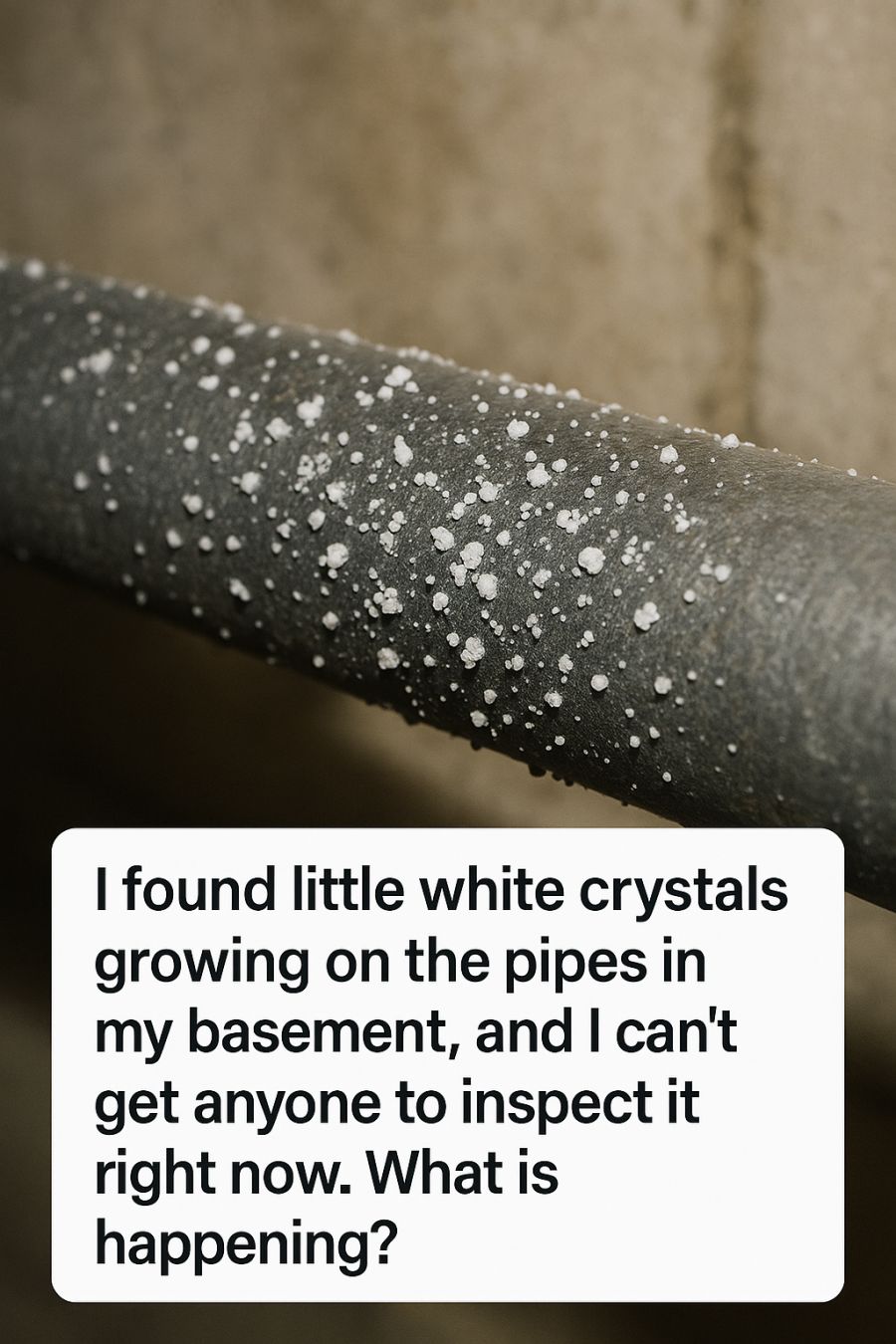
Discovering little white crystals on the pipes in your basement can be a perplexing and concerning experience, especially if you are unable to get a professional inspection right away. These crystalline formations can be an indication of underlying issues that may need your attention. Understanding what these crystals are, why they form, and how to handle them can help you maintain your home’s structural integrity and prevent further complications.
In this article, we will explore the potential causes behind these mysterious white crystals, commonly known as efflorescence. We’ll delve into the science behind their formation, how to differentiate them from other potential hazards, and discuss practical steps you can take to address the issue while waiting for professional assistance.
1. What Those Little White Crystals on Your Pipes Probably Are
The white crystals you’re observing are likely a phenomenon known as efflorescence. This occurs when water seeps through porous materials like concrete or brick, dissolving salts and minerals within the material. As the water evaporates on the surface, it leaves behind a powdery white residue composed primarily of calcium carbonate, sodium sulfate, or potassium nitrate.
Efflorescence is most commonly found in areas with high moisture content, such as basements. It is usually not harmful in itself but can indicate moisture ingress, which might lead to structural damage if not addressed. The crystals can appear as a fine white dust or in more pronounced crystalline formations, and they are more prevalent in older homes with less sophisticated moisture barriers.
2. Why Efflorescence Forms on Basement Pipes and Walls
Efflorescence forms when there is a presence of water-soluble salts in the construction materials of your basement, coupled with moisture. Pipes, being metal and often in constant contact with moisture, can provide a perfect medium for these salts to crystallize as water evaporates.
Basements are particularly susceptible to efflorescence due to their below-ground nature, which subjects them to higher humidity levels and potential water intrusion from rain or groundwater. Poor drainage, inadequate waterproofing, or even seasonal changes can exacerbate the problem, leading to the visible white crystals on both walls and pipes.
3. How to Tell Efflorescence From Mold, Asbestos, or Other Hazards
Efflorescence can easily be mistaken for mold due to its white color, but there are key differences. Efflorescence is dry and powdery, and it dissolves in water, whereas mold is usually fuzzy and can be various colors, including black, green, or blue.
Asbestos, on the other hand, is a fibrous material used in older insulation and construction materials. Unlike efflorescence, it does not dissolve in water and poses serious health risks if disturbed. If you suspect asbestos, it’s crucial not to disturb the material and to call a professional. To differentiate efflorescence from other hazards, try wiping the crystals with a damp cloth; if they dissolve, it’s likely efflorescence.
4. Common Plumbing and Moisture Problems Behind the Crystals
The presence of efflorescence often points to underlying moisture issues. Leaky pipes, poor drainage systems, or inadequate vapor barriers can contribute to moisture accumulation in a basement. Water can seep through walls or floors, carrying salts to the surface.
Plumbing leaks are a frequent culprit, as even a small, persistent leak can create the conditions necessary for efflorescence to form. Additionally, condensation on pipes due to temperature differences can also lead to moisture buildup, further exacerbating the problem.
5. When White Crystals Signal a Serious Leak or Structural Issue
While efflorescence itself is not hazardous, its presence can indicate more serious issues such as a persistent leak or a failing waterproofing system. If left unchecked, these problems can lead to significant water damage, mold growth, or even structural deterioration.
Signs that you may have a serious issue include a rapid increase in the amount of efflorescence, the presence of moisture on walls or floors, or visible cracks in the foundation. In such cases, it’s important to address the underlying moisture problem to prevent further damage.
6. DIY Tests You Can Safely Do While You Wait for an Inspection
While waiting for a professional inspection, there are simple tests you can perform to assess the situation. One method is the tape test: press a piece of clear tape over the crystals, and if they stick, it’s likely efflorescence.
You can also conduct a water test by spraying a small amount of water on the crystals. If they dissolve, you are likely dealing with efflorescence. To check for moisture, place a piece of aluminum foil on the wall or floor and tape the edges; if moisture is present, condensation will form under the foil.
Continue reading…
