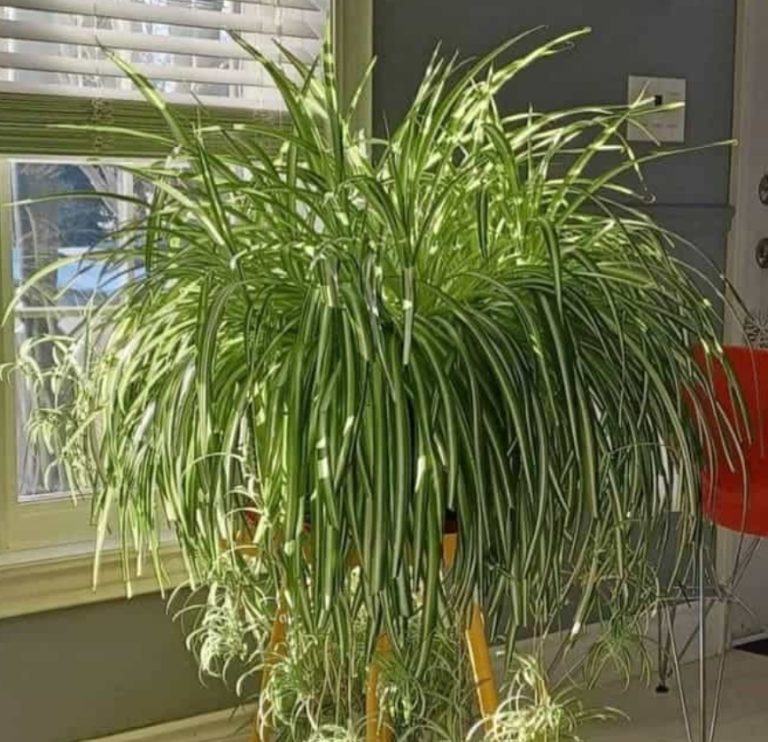
5. Feed for Fuller Leaves
During spring and summer, use a balanced liquid fertilizer (diluted to half strength) every two weeks. Over-fertilizing can cause brown tips and stunt growth, so moderation is key.
6. Propagate for a Lush Look
Those little “spiderettes” hanging down can be trimmed to redirect energy to the main plant. Or, repot several babies into the same container as the parent to create a fuller, cascading effect that looks incredible in hanging baskets.
7. Keep Them Comfortable
Spider plants prefer temperatures between 60–75°F (15–24°C). Avoid placing them near air conditioners, heaters, or drafty windows. While they tolerate average humidity, they’ll grow faster and stronger in slightly more humid environments.
8. Prune Regularly
Remove yellow or brown leaves at the base to encourage fresh growth. Trimming also improves airflow around the plant and keeps its shape neat and balanced.
9. Repot Every 1–2 Years
If you notice roots poking through drainage holes or the soil drying out too quickly, it’s time to repot. A slightly larger pot gives your plant room to grow and prevents it from becoming root-bound.
10. Rotate for Even Growth
Spider plants naturally lean toward the light. Turning the pot every week or two helps them develop evenly, ensuring a full, rounded shape.
Why You’ll Love Growing Spider Plants
- Beginner-friendly – Easy to care for, even if you’ve never owned a plant.
- Air-purifying benefits – Known to help improve indoor air quality.
- Decor-friendly – Works in hanging baskets, shelves, or tabletops.
- Fast growers – With proper care, they multiply quickly and stay lush.
Final Thoughts
Spider plants are proof that houseplants don’t have to be complicated to be rewarding. By choosing the right spot, watering wisely, and giving them a little extra love with fertilizer and pruning, you can enjoy a plant that not only survives but thrives. Whether you’re decorating a modern apartment or brightening up your office, spider plants bring a fresh, green touch that feels timeless.
