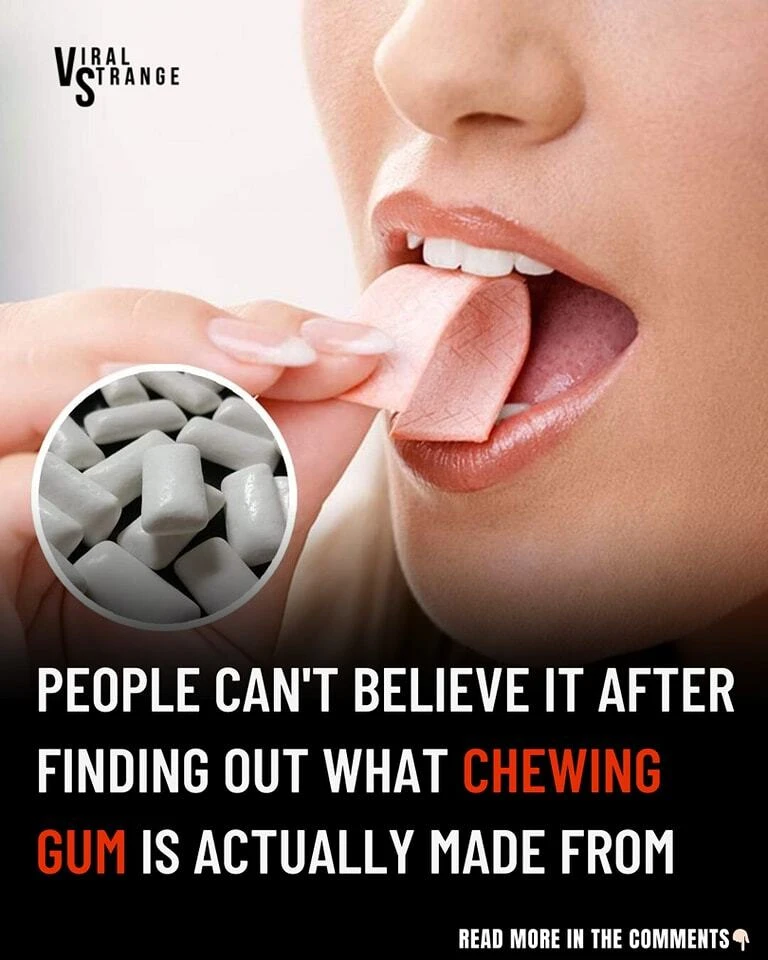
Chewing gum has been a staple for fresh breath and a calorie-free snack. Yet, surprisingly few know what goes into it. Despite its seemingly harmless appearance, the ingredients in gum may shock even the most mindful consumers. Here’s a breakdown of some common components that have left people questioning what’s in that small, chewable treat.

Chewing gum was originally made from chicle, a natural sap from the Sapodilla tree, which provided a chewy texture. However, over the years, manufacturers shifted to synthetic ingredients to keep up with demand.
Today, most gum contains polyisobutylene, a key component in butyl rubber, also used to make inner tubes. This change aimed to enhance durability, but the idea of chewing rubber has surprised many consumers.
Polyisobutylene is combined with plasticizers to give gum its signature chewiness. “Polyisobutylene is mixed with plasticisers and materials—all food grade—to make the gum mixture chewable,” says BBC Science Focus. This engineered rubbery substance softens at body temperature, creating gum’s familiar texture without breaking down. While considered safe, the thought of chewing rubber can be off-putting for some.
One surprising ingredient in certain gum brands is lanolin, a wax derived from sheep’s skin glands. Often found in skincare products, lanolin gives gum a smooth, glossy texture. Many are unaware of its origin, and a viral tweet highlighted that lanolin may be part of your favorite gum. Since it’s part of the gum base, manufacturers aren’t required to disclose it on the ingredient list.
Artificial sweeteners, such as aspartame, are also common in modern gum. Aspartame is 200 times sweeter than sugar, making it a low-calorie alternative. However, it’s a subject of health debates, with concerns about long-term effects. According to the Mayo Clinic, artificial sweeteners are generally safe in moderation, though heavy use has been linked to potential health risks, including stroke and heart disease. Still, more research is needed.
continued on next page
