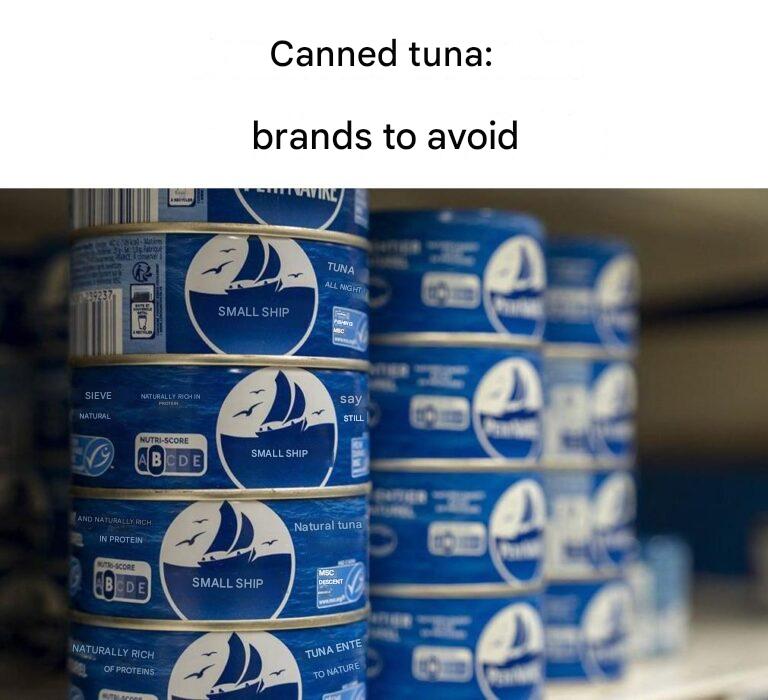
Some brands stand out for their particularly worrying mercury levels. For example, a can of tuna from the French brand Petit Navire, purchased in France, had a concentration of 3.9 mg/kg, almost four times the authorized limit for tuna. Other brands also revealed worrying levels: Carrefour products purchased in Spain contained up to 2.5 mg/kg, and those from the Italian brand As do Mar reached up to 1.5 mg/kg. These contamination levels reflect insufficient controls and a lack of uniformity in food safety standards across European countries.
Faced with these figures, Bloom and Foodwatch denounce the permissiveness granted to tuna compared to other fish and underline the dangers of this situation in a context in which tuna is one of the most consumed fish in Europe.
Recommendations from health authorities and requests for a ban
The French Agency for Food, Environmental, and Occupational Health and Safety (ANSES) issued an alert on October 24, highlighting the toxicity of high doses of methylmercury, particularly to the central nervous system, which is highly vulnerable during prenatal development and early childhood. ANSES recommends consuming fish no more than twice a week, varying the species, and limiting so-called “predatory” fish, such as tuna. It also provides specific advice to pregnant women, advising them against consuming fish such as tuna, skate, sea bream, and anglerfish.
Bloom and Foodwatch are calling on authorities to impose a limit of 0.3 mg of mercury per kilogram of tuna, equivalent to that of other fish, and to ban the sale of products exceeding that level. They also suggest banning the sale of tuna in certain sensitive locations, such as nurseries, hospitals, maternity wards, retirement homes, and school cafeterias, to protect those most at risk.
Citizen mobilization and actions requested from distributors
continued on the next page
