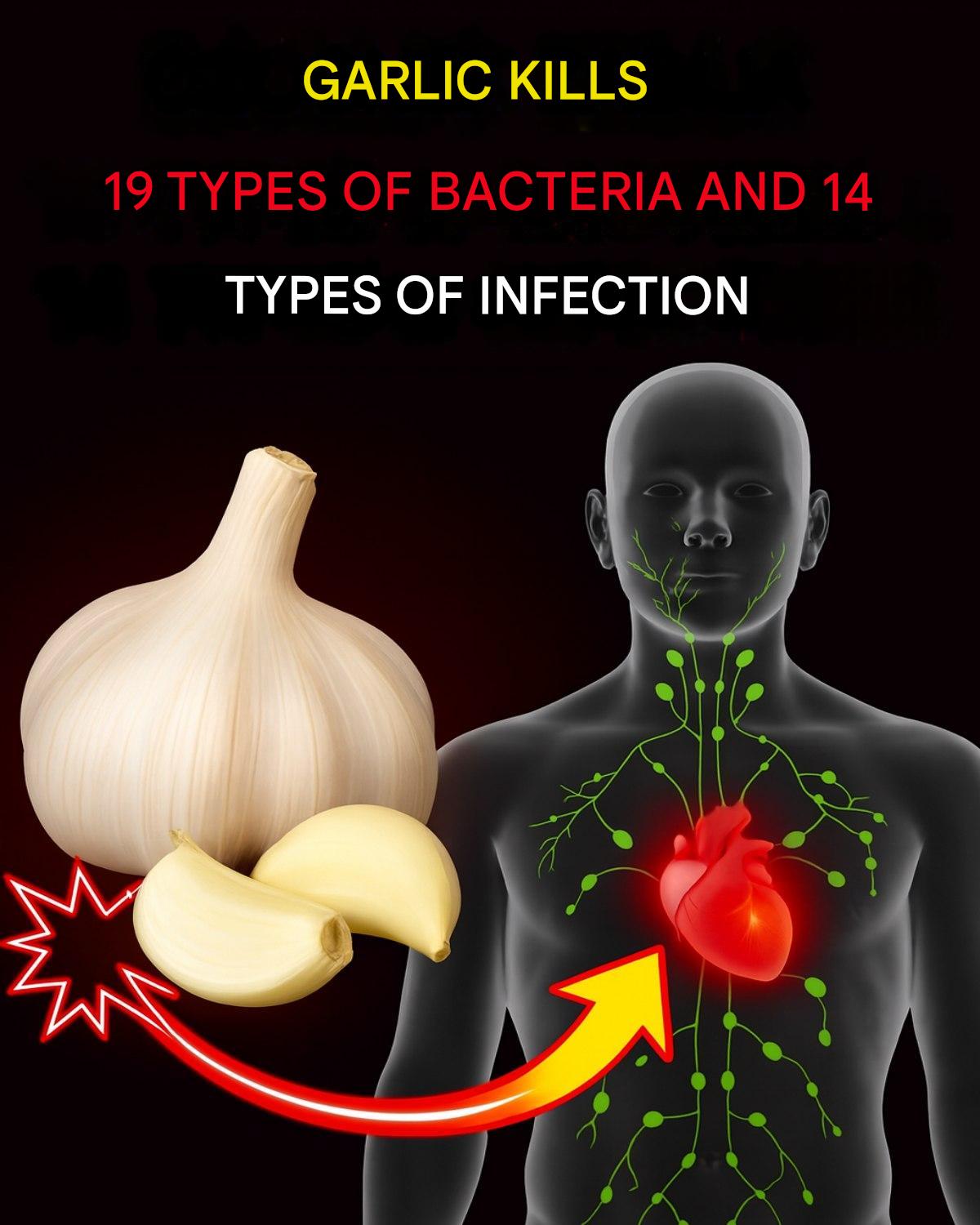
Garlic has been used as a natural remedy for centuries, and there are many rumors circulating online about its “superpowers,” including that it kills 14 types of bacteria and 13 types of infections.
So what does the science really say?
⭐ 1. Garlic has real antibacterial properties
Garlic contains allicin, a powerful natural compound produced by crushing or chopping fresh garlic.
Laboratory studies show that allicin may:
Slows down the growth of bacteria
Damage the cell walls of bacteria
Helps the body fight infections
Some of the bacteria that garlic affects in laboratory conditions are:
E. coli
Salmonella
Staphylococcus aureus
Helicobacter pylori (associated with stomach ulcers)
Klebsiella species
👉 This means that garlic does indeed have antibacterial properties, but…
⚠️ 2. The claim “14 bacteria, 13 infections” is exaggerated
There’s no official scientific list that says garlic kills exactly “14 bacteria and 13 infections.”
This number usually comes from popular posts or alternative medicine websites, not medical research.
Garlic can help the body fight microorganisms, but it cannot replace medical treatment.
⭐ 3. Garlic also has antifungal and antiviral properties
Some studies show benefits in the fight against:
Candida (yeast infections)
Fungal skin infections
Some viruses (e.g. colds)
But let me reiterate: these results are from laboratory studies, which means garlic works well in a petri dish, but not necessarily as medicine in the human body.
